
“Live as if you were to die tomorrow. Learn as if you were to live forever.”
― Mahatma Gandhi
Goal (not resolution) f or 2014: read more; learn more
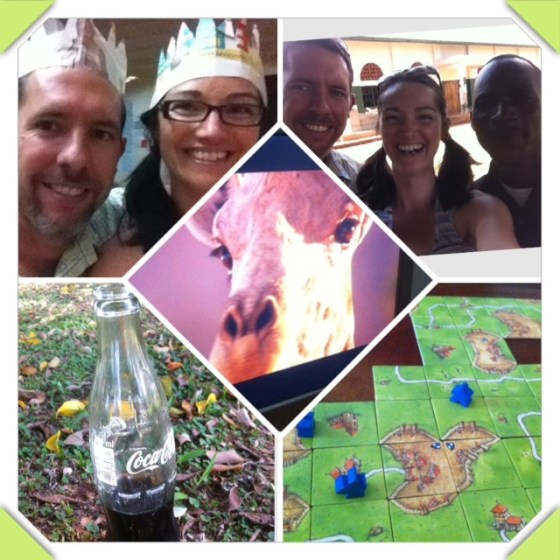
How do people in Gulu celebrate Christmas? Well there’s probably a few hundred chickens less in town: Christmas meal is certainly freshness guaranteed; and Coca Cola can also celebrate an increase in sales throughout this week. No presents though: I asked a neighbour if her husband would buy her a gift: “no”, she replied, “people only do that when they are courting”.
How did we celebrate Christmas? A pancake breakfast with the neighbours (which most possibly ate out of politeness, not because they liked the flavour); a meal shared with a security guard who sadly was ‘on duty’ all day; intermittent Skype calls to our loved ones, a newspaper/toilet roll Christmas cracker; board games and the delights of David Attenborough on DVD.
There’s no charade here. No expectation to keep up with any Jones’. Refreshing to reflect on the importance of Christmas: to remember the incredible gift of Christ and his purpose of being sent. Also a time to value and appreciate our friends and relatives who love and support us dearly. Thank you to all reading this, you are a special part of our lives! Merry Christmas! Love, Dan and Jodes xxx
First day back in Gulu and I am walking through the village, heading back to church from school. A teenager I know runs up to me: “Jody, you are so fat now!” (Thanks). She then goes on to describe the areas I have so-called piled on the pounds: my arms, stomach and bottom. Prompt: fake-laugh. I reply that I plan to lose it and get back to my old shape; “no, no”, she replies, “I like you this fat, you look good!”.
Dan and I possibly heard this expression from over a dozen people today – thanks Gulu! We know you love us and we know you want us to stay fat but we will not look this great for long (we hope anyway)…
I had studied and talked about culture shock numerous times. I never experienced any of the common symptoms of this condition when entering Africa; however I have now been struck down when I least expect it: when returning to my ‘homeland’ Australia when I know exactly what to expect.
Two nights ago I found myself hiding in a room, sitting on a floor crying whilst staying at a relatives’. What prompted this? A four-year-old packing up her toys. Sounds pathetic doesn’t it? I could go on to explain that there were rather a lot of toys in the room at the time or to add that she the toys with the ball of her foot (easier than picking them up, laziness or a time saver? Only she knows…) I guess the point I am trying to make is I have been overwhelmed and, at that moment, overcome with how materialistic and consumer-driven this country is. Children in the west have so many toys! We are probably the most materialistic and consumer-driven we have ever been in history.
The sheer volume of toys almost dictates their value and how they are treated.
I am certainly not blaming parents for ‘spoiling’ their children; and possibly only about 20% of toys come from parents of young children; many are gifts from friends and relatives. But when do these generous gifts become too much?
This was in stark contrast to the surroundings I have just come from. Where children have no commercial toys. I have heard many sympathetic comments about the ‘poor children in Africa who have no toys’. I perhaps joined in that whimpering cry at one stage – but not now. One of the things I absolutely love about Uganda is the toys that the kids make for themselves: the go-karts made out of broken jerry cans; kites made out of shopping bags and sticks; and toy cars made out of wire and recycled materials. People have asked me can they give me some toys to take to the ‘poor kids in Uganda’; my response is ‘no; don’t stifle their creativity’ – why would we want to replace a brilliantly crafted wire, juice-carton and bottle top car with a plastic one?
There are many things I love and miss about my Australian culture but, sadly, this is certainly not one of them – this is something I miss about the Ugandan culture. How do we teach our children to respect and value what they have when they have so much and it is so easy to get? When did wants become needs? When did treats become an expectation? I walk around in dismay and disbelief but I fear when I finally return to oz for good I will slip right back into all aspects of this culture… which is equally concerning.

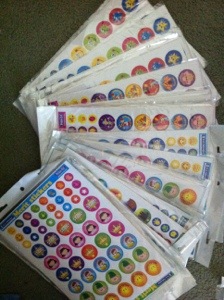
An enormous thank you must go out to RIC Publications in Australia which has donated more than $1000 worth of motivational/reward stickers for me to give to the teachers in Gulu. I can’t wait to see the teachers’ faces at Layibi Techo next year! Also planning to give a nice little supply to all graduating teachers from the primary teachers college – RIC, let me thank you on behalf of the children of Gulu who you will be blessing indeed!
African burial in the wet season…
The night before we took our neighbour out on a ‘birthday drive’ we chatted with him and told him to be ready by 10am. He said he was only joking and we didn’t have to take him on a drive. After reassuring him that it was organised and locked in, then we could see tears starting to well in his eyes. Overwhelming, perhaps for him; humbling for us…
One of our neighbours turns 18 on Friday. His dad is an alcoholic, lives in the village and spends most of the family money on alcohol. He lives next to us with his aunt. He works very hard for her in his spare time in exchange for her paying his school fees, accommodation and food. He’s a very trustworthy, honest young man, met few like him here. Chatting today with him and he asked us what we would buy him for his birthday (that’s the way they do it here, even more direct than us!) We suggested a chicken to have a meal with him but he didn’t seem too fussed on that one… so we asked him. What does he want? Daniel to take him for a drive in the car.
Had a very interesting chat with a colleague at school about polygamy. My male teacher colleague was adamant that it is acceptable for men to have around 4 wives; even to say that God thinks it’s ok. I said if God is for polygamy, then why didn’t he create more than just one woman for Adam? His reply: God was tired, if he wasn’t so tired God would have made more women for him 🙂
Part of my teaching studies included a unit on child abuse. For me now it is no longer just textbook examples. This week a P4 (year 3) child came to school with swollen hands and could not walk properly. The cause? Some serious beating from his father. His crime? He went to the neighbours to read over his school books because his house had no paraffin left in the lantern.


 Dan and Jodes... in Gulu, Uganda