
Yesterday I visited the local government primary teacher’s college to do some ad-hoc lecturing on p honics. During discussions around the staffroom table I learnt that the pass mark for mathematics and science was recently dropped considerably across primary teaching colleges nation-wide. The pass mark is normally 40 per cent (that is still very generous). However I was told that because the science and mathematics results were so low, tutors feared that too many students would fail and not enough teachers would graduate and fill the demand of teaching positions. So, in great wisdom the science pass mark was dropped to 30 per cent and the mathematics pass mark fell to 25 per cent. These are the future teachers of Uganda! The primary education system is already in a dire state with poor academic results, however I fear that the future looks bleak with results like this.
A time to vent…

A P5 (year 4) class at a local municipal (town) primary school in Gulu, Uganda.
I wasn’t planning on posting again so quickly but, returning home elated and frustrated at the same time, Dan suggests that I ‘vent’ by blogging – so here goes…
I visited the local government primary teacher’s college today to do a little lecturing in phonics with the second year students. In true African fashion I just entered the class that didn’t have a teacher and taught. Whilst loitering later on in the staffroom there were two things that got my attention – one caught my eyes and the other my ears. Firstly my eyes: Around the wall were a series of large A3 laminated signs. They looked professional and possibly from a recent workshop. These signs clearly displayed lots of modern teaching and learning pedagogy: self and peer assessment, different discussion techniques, all the stuff that we learn at a western university. I also spot another muzungu – an American with a non-government organisation working mostly with ICT and Science – and overhear some of his conversation with the deputy. He was discussing that he couldn’t find all the science resources he needed, such as a microscope. My thoughts in my head went something like this: ‘A microscope! A microscope! Does he realise he’s in northern Uganda! And if by some slim chance they happen to find these elusive microscopes in the teaching college I don’t know of any local government primary school that would have a stock of microscopes on hand for their science lessons with 100 pupils.’ And then don’t get me started on ICT – the majority of schools in the municipality don’t even have electricity! Without a doubt the biggest need is to teach these children how to read! Last week primary children all over the municipal completed ‘welcome tests’ – a nice way to welcome them back to the new term. I scanned the P4 (year 3) English results at my local school and I thought I was looking at a UK weather chart: 02, 03, 00, 04, 05, 02 – nope, not temperature readings, these are percentage results. Primary school children cannot read! And primary school teachers do not know how to teach these children how to read in English. It is an ongoing problem that just keeps snowballing as they get older. And what do our wonderful non-government organisations do to help the education levels? Pour thousands into developing ICT, Science, even teaching pedagogy practices that I doubt will make its way to the classrooms. Do you think discussing a ‘traffic light approach’ where a child will colour in green, red or orange on their paper to show their level of understanding is really where we should be focusing our attention? (Besides, there’s not even any traffic lights around here!) Who’s making these decisions and where are they based?
This is Africa! Let’s focus on the greatest need in primary education – teaching reading – and do it in a culturally accessible way.
On to the elated point, to leave on a high, the municipal schools inspector has organised for me to teach some of the local government teachers phonics as a way to teach reading. First training day is Friday where I will be teaching Layibi Division (one of the four divisions of the municipal). Five teachers from each of the seven government and five private primary schools have been invited to attend. Bring it on!
Time for hospitality…
Over the past six days we have reflected and pondered on some parts of the local Acholi African culture that have challenged us in one way or another. The final post in this little Unplugged mini-series is also a challenge, but a positive one and hopefully one we can all learn from. The Bible says that some people are gifted in hospitality; well I would almost have to say that all Acholi people are blessed with this gift! Hospitality is a part of life here, and on many occasions we have been blessed to be on the receiving end of such kind and generous hospitality.
Most families will cook more than they need for meal times, the main reason for this is to feed an unexpected visitor. Many times we have dropped in on a neighbour and before long a plate of chicken and rice or beans and posho (remember that lovely corn flour play-dough thing) is placed in front of us, it’s like it just appears out of thin air! We are a bit slow to learn from our hospitable neighbours and when we have unexpected guests we scrounge around for something but can rarely find anything comparable (why do we only cook just enough for us?)
Whenever we go anywhere, and I mean almost anywhere, if we stand for more than 30 seconds or so a chair miraculously appears beside us: “you sit!” is the command that generally follows. It took us a while to get used to this – visitors should never stand. Visitors also get the privilege of eating first and are quickly reprimanded for taking small portions and almost coerced into serving more. Anytime a visitor walks into a classroom at school they are greeted with a whole range of brilliant school praise gestures; from rhythmic clapping to flower actions and sounds.
If you travel anywhere and then come back you will always bring with you ‘greetings’ from where you came. Everyone in the community knows each other, it’s not just a matter of knowing your neighbours, people know their community! When you arrive for work it is common for someone to greet everyone on site before getting down to business (now that can take a little time and may well be frowned upon in our results-based world). Relationships seem to take much higher importance and priority over physical work, in any institution.
We have learnt a lot in our time here, and one of those things is the importance of just ‘being’; although we don’t practise this very well.
Times when I just can’t sleep!
There is a law here (I’m told) that bars and disco halls must close and music be turned off at midnight. No loud music after midnight. But… like many other laws, do you think this one is followed? Fat chance! Friday and Satur day nights you will often hear music all through the night – there’s no reprieve! In theory, the closer you are to town the louder it is but you never know when a party may spring up in your neighbourhood. An African party, surely those traditional instruments mustn’t be that loud you say? Sadly, this is where the west has made some of its biggest influence and you cannot have a party, wedding or even a funeral without a set of speakers almost as tall as me! We recently had a traditional wedding in the neighbouring compound – the music was so loud that I could literally feel the vibrations through my body. This lasted for about 35 hours. I didn’t even bother trying to sleep that night, just read a whole book with Michael Bublusic, on my iPod attempting to soothingly drown out next door’s shindig.
I did get excited one loud night when electricity went out in the middle of one of these events – but have no fear there’s a generator on standby, and they certainly make sure they drown out the roar of the generator.
Daniel doesn’t even have to watch the football (soccer) these days. He just checks the score when he hears a loud cheer from the nearby video hall (temporary structure made of bamboo and papyrus two small televisions; locals pay 12p/21c for the privilege of cramming in to watch the game).
Ironically, Ugandans have extremely good hearing – they talk very softly and I often have to ask them to repeat themselves several times. You wouldn’t think this though when it comes to music time! Over the years they have grown so accustomed to that constant noise, especially during sleeping hours, that I know of some locals who have to crank the volume up on their earphones to put themselves to sleep.
Times when we try not to conform
This one’s from Dan…
I recently had to get someone arrested as we came across evidence of large-scale theft. To my surprise I had to drive the police officer, along with the person being arrested, in my car to the central police station. The police officer then asked me for money to get home and when I gave him the exact amount to get home he wasn’t happy, pulls me aside and says: ‘you give me more’. I refused. This is an everyday occurrence here. Local drivers regularly break the law, either driving without a licence, in an un-roadworthy vehicle or over-loading to an extent where the lorry looks like it may topple over. Drivers accept their fate: police will pull them over and ask for a soda (otherwise known as a bribe), they pay and then keep going. But corruption doesn’t start and end with the police, it’s right through the system. A local mate of mine had a job interview at a large bank. During the interview process, he and probably everyone else who was short-listed (about 12) each handed over an envelope with a large sum of money to the human resources officer. His opinion: the largest secret bidder got the job.
I walk into a local hardware store, buy a range of tools, and then when I said I need a receipt the shopkeeper asks me: ‘how much do you want me to write on the receipt?’
When you drive the 330km journey from Kampala to Gulu (which can take up to seven hours) the roads are pretty good for the first half but as soon as you get more into the north the road suddenly turns into something you would expect on the moon. Locals answer to this: the money was ‘eaten’.
The saddest part of all of this is muzungus participate. The easiest option is to pay a small bribe to the police, a government representative or whoever. By participating we are also stating that corruption is acceptable.
Times when I will not bow down
Walking through the school playground, pupils squat down as I and other teachers walk past as a mark of respect and reminder of a teacher’s authority. During infant school years children are introduced to a strong hierarchica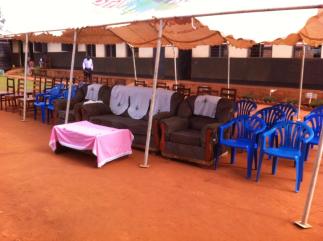 l structure within this country. When I first started teaching here it quite disturbed me that when a child would approach me to ask anything they would kneel in front of me; I have even seen student teachers kneel down to speak to their tutors at the teacher’s college.
Wives kneel down when speaking to their husbands or any other man; as well as when serving food. Many months ago a teacher asked if I knelt down to speak to Daniel, I replied that I bow down to no man, only God, not sure if it was culturally appropriate to respond this way, but I still standby what I said. Local government representatives are offered a three-piece lounge chair (sofa) to sit in during official functions (which are generally outside under a mango tree). It is quite customary here for staff to eat together: at school all teachers eat our serving of beans and posho (a fluffy, playdough-like solid containing corn flour and water) together in the staffroom; whereas the head teacher, two deputy head teachers and school accountant eat in a separate room and are served beans and posho with an extra side dish of vegetables. In the school office there is a large piece of cardboard with photos of all staff members. The head teacher’s almost life-size photo screams from the top-centre of the poster; then the deputy teachers follow, subject leaders and then other teachers slowly descending in size of photos and indeed importance (my small photo appears near the bottom). Historically, this hierarchical structure possibly started as a mark of respect for elders – a way for the community to show them honour and also to keep order. Now, this respect seems to be used as a vehicle for power and a way of exercising control. No one will question the decisions made by the bearer of the large photo or the one who sits on the large armchair… even when it relates directly to them.
Times when I am thankful I was not born here
I am often asked by locals how many children do I have. When I reply none, the response is generally quite typical: ‘Why? Are you barren? Aren’t you worried Daniel will leave you and get another wife?’ Thankfully I am so secure within my marriage that these thoughts are not even on my radar, I am also not offended or hurt to hear these comments, just part of local culture and now I expect them. Local women, however, don’t share this same security.
One teacher at school was married for a number of years but when she didn’t ‘produce any children’ her husband bought (yep, in the literal sense of the word) another wife who soon gave birth and then treated her with disdain. Another teacher was married and had three children. All the children became sick (sickle-cell) and died in their infancy. Their eldest reached year 6, however as soon as he passed away her husband left her for another woman and took with him all their money and possessions. Unfortunately it is not only men who treat women like this: mother-in-laws will kick out a daughter-in-law if they don’t ‘produce’; a woman’s identity and value rests in producing children for her family: leaving heirs in the family line.
Women are bought. The bride price (dowry) is in correlation to a woman’s education. A woman who has only finished primary school will have a much smaller bride price – here, around 600,000 Ugandan shillings (£140 or $AUS250); along with possibly a couple of goats. An educated woman, however, will attract a much larger dowry: I know a medical assistant who is struggling to raise 20million shillings (£4,700; $AUS8,400) along with around 20 cows and numerous goats and chickens.
It can take husbands years, and sometimes decades, to pay off the bride price: often keeping the family in poverty until their own children marry and then the cycle will return to them.
With this ‘price’ often comes a feeling of possession or ownership. Chatting to a teenage neighbour of ours recently who was helping us around the house I said to him: ‘I hope you will help your future wife around the house like you help us’. ‘Why should I?’ he responded. And through the conversation it came out that he thought since you ‘buy’ a wife, they are yours to order around and serve you.
A good local friend of ours recently told us that her husband just got another wife; she said she was unhappy about it but at least she didn’t have to dig so much in the garden. Women work hard here! They fetch water, wash clothes, clean, cook, serve their husbands’ food and generally have little say in their ‘night time activities’.
I understand that much of this is local culture, a very traditional culture quite contrary to mine. That’s ok. But what I don’t understand is what happens when Biblical and local cultures collide? The husband and wife relationships that I read about in the Scriptures are quite contrary to this. I pray that local Christian men will stand up, be leaders in their communities, and restore the rightful respect and value to women here.
Times when I just don’t know what to do.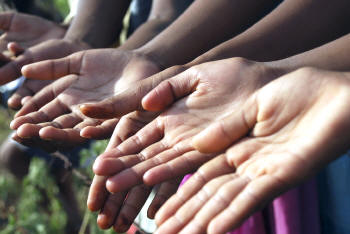
Lining up outside a shop in town waiting to buy some local popcorn, an elderly woman comes up to me, hands out-stretched, demanding for money. She grabs me by the hip as I walk past, still insisting. Walking past a bore hole in the village another elderly lady comes up to me, yelling in the local language that I give her money (that much I understand, even stipulating how much), she tries to grab at one of my pockets of my blouse to search for coins. Walking back home from school children yell out: ‘Madam, you give me ball, you give me toy’. Countless women come up to me and ask me to pay for their children’s school fees. The watchman signals to me as he opens the gate: hand actions for a soda. Being the only ‘white lady in the village’, and one of a small network of western missionaries and NGO workers in Gulu, I regularly see poverty and am often asked for money, food or other items. I have grown accustomed to the asking and have tried to respond in various ways: sometimes we have given food to beggers in town (but asked a local to do the giving for us so we aren’t seen as the ‘white face’ behind the food); sometimes we lend money to friends in a tough situation; other times we have offered them money in exchange for a service (such as cooking or washing clothes); then there’s the time when we ask them what they really need a soda for, or say that we want money too (now that certainly takes them by surprise).
We have done a lot of reading up on this topic and chatted with other missionaries and still don’t know what to do, even after a year and a half! On one hand we see the need, and we know that Jesus commands us to help the poor; however we have also seen that some giving has short-term benefits but long-term consequences. We are living in a post-war, post-charity-flood area where locals have grown accustomed to handouts. It is only in recent years that the World Food Programme and other large relief agencies packed up and decamped (probably across the border), however they have left a legacy of expectation, particularly when a white face is seen.
I guess the reality is we are moving from relief and rehabilitation through to development but there are so many people left behind. It’s hard to know how to really help these people.
When I feel I am smashing my head up against a brick wall.
Let me set the scene: I have been teaching voluntarily for almost one and a half years at a local government primary school. These classes have an average of 100 kids per class, but this year enrollment in infant classes has spiked and P1 (reception/kindergarten) has 145, the cap was suppose to be 110 but let’s just say there was a little administration error… (clarification, this is one class, one room).
The majority of infant exams and all primary exams are in English, however children’s reading levels are extremely low. Extremely low is an understatement, many cannot even read the exam question, let alone attempt an answer. I have found this personally quite shocking and challenging, especially when a sponsored child is attending school but can’t read. It’s a reflection of the local government education system.
The main (or only) way of teaching here is ‘chalk and talk’, parrot-rote learning. It’s pretty hard to learn to read English that way, especially when it’s your second language.
It is not all doom and gloom, however, and a third of the way through last year I started to tackle this issue at the grassroots team-teaching phonics with some infant class teachers. The P1 class teacher welcomed this new knowledge and skill with open arms and low and behold at the end of the year the kids can read! What? P1? I have taught two workshops to teachers on how to teach phonics (one workshop not all teachers attended because they didn’t get paid a ‘sitting fee’, cue: scream). I have discussed this matter in great detail with school leadership and urged teachers to try and adopt this different approach to teaching reading. They all agree it is a great way and request me to teach their classes, but are unwilling to teach it themselves.
Problem: Phonics is not in the Ugandan syllabus. Their suggested solution: Well, there is none because we have to teach the syllabus. Just pull up and work harder, even when the syllabus does not teach children to read.

That’s my head against the wall…
Classes have been extended, struggling parents have been paying extra money for more of the same and still: children’s reading does not improve.
It just seems to be this weird vicious cycle. Yesterday during a staff meeting there were comments about poor reading and writing for P4 and P5 children and teachers were asking why this could be the case: cue: scream! Their possible solution: Extend the extra lessons: keep children until 6pm to teach the syllabus, more of the same! (background: they already start their extra morning programme at 7.30am). Cue: Bang, bang (that’s my head against the wall).
This week one of my ‘Facebook Friends’ commented on a post I wrote, stating that I live a very exciting life out here in Uganda and that she loved reading my posts. Exciting: This got me thinking… It certainly is exciting in that I am experiencing so many things that many of my friends could only imagine or dream of. However I realised I tend to filter so many experiences and post what I believe are my ‘quirky’ observations on Facebook, things about living in this culture which I believe my muzungu (white) friends will find a little surprising, interesting and possibly quite funny.
On reflection, these posts are only a glimpse of my experiences here in Gulu; and possibly a glimpse through rose-tinted ‘Facebook’ glasses. There have been many experiences I haven’t shared: times when I have sat and cried; times when I want to scream with frustration; times when I feel guilty; times when I just don’t know what to do; times when I am completely confident this is where I am meant to be; times when I feel I am smashing my head against a wall; times when God lifts me and puts me back on my feet; times where I am so excited that I am learning new things; times where I thank God I was born where I was; times when I want to just lock myself indoors and watch the whole series of Pride of Prejudice; times when I am overjoyed with the small victories; and times when I question if anything I am doing is making a difference.
So… I have decided to post a series of seven posts in seven days. In each of these posts I will try to explain more of my ‘real Ugandan experiences’; it will be ‘Life in Uganda Unplugged’.


 Dan and Jodes... in Gulu, Uganda