What of the children?

President Museveni partially lifted lockdown restrictions last night. Whilst private vehicles can now move again and passengers are now legally allowed on a boda (motorbike)… schools are still closed.

We currently have a class of eleven children who we are personally teaching every day: neighbourhood homeschool. My mind is completely torn about how I feel about this class and education here right now.
On one hand, I’m so thankful for the opportunity we have to teach our neighbours, and not to boast, but these kids are getting a ‘damn good education’. I’m so proud of them; their reading and writing has grown immensely, particularly for a few of them. We pack a lot into our morning lessons (which sometimes flow into the afternoon) and I can see a lot of progress. And of course, Myron is thriving learning with others (always a bonus for an extrovert).

On the other hand, the first three years of primary school has been closed for a year and a half, and it is likely that children won’t go back to school until next year. The new guidelines state that schools will remain closed until “a sufficient number of children aged 12 to 18 are vaccinated”. But… where are the vaccines? There are currently NONE in the country. Not a shortage, not an allocation for one age group or industry, but none. A few weeks ago more doses arrived, however they were only allocated for second dose vaccinations and dried up within hours.

And what of the children who are under 12? They are the ones who have not returned to school since lockdown was first announced in March last year. Other year groups have gone back, albeit for not very long, but they have gone back for some learning.

I can only imagine what educational state children will be in when they do finally return to school… whenever that will be. But school not only helps children learn here, it also helps keep children safe. UNICEF has reported many increased cases in Uganda of teenage pregnancy; sexual abuse of children; physical abuse and even one case of murder during school closure. And there is a very real risk that a large proportion of these children may never return to school when they do open again.

We are allowed to have 20 people at social events (wedding, funerals, etc), and public transport can operate at 50%, so why can’t we have 20 children in schools? We already have guidelines and standard operating procedures on how to do this in schools (written by the government). I must be missing something… but I really can’t quite understand why children are not back in school. The children, yet again, are victims and seem to have no voice in this time (or more to the point… overlooked and poorly represented).

In the meantime, my colleagues and I will keep teaching children within our neighbourhoods, we will keep teaching on the radio every day, and we will keep waiting for the vaccinations to come. And no doubt this week we will discuss what more we can do for children still at home…

For those who pray, please pray for vaccines to come (in loaves and fish proportions) and for those making decisions about education in Uganda.

Sugar-coated challenge

I was cycling home from our office when I passed an old friend on his bicycle. We quickly recognised each other, then circled back to greet each other. My old friend was carrying a stick of sugar cane chopped into several pieces and strapped to the back of his bicycle. 

He has many children and an uncertain future (work-wise); however his first thought when seeing me was to unstrap his sugar cane and give me two pieces (with strict instructions to give one to Myron). 

I didn’t have anywhere to strap them; and they were quite cumbersome to carry; however I accepted his generous gift. 

His first thoughts in seeing me was to look at what he had and to share some of it with me. These are never my first thoughts; I barely even remember to offer visitors a cup of water when they visit 

I am certainly challenged a lot from the culture I live in.

Opportunities in the lockdown…

Meet Olyec Andrew (in the middle). This is certainly not the clearest photo; however the story behind this photo (and many like this) are the roses amongst the thorns of lockdown. Andrew used to struggle with maths in his local primary school in Gulu. Although that was a long time ago now…
Now, Teacher Dick has been teaching Andrew as part of READ for Life’s neighbourhood teaching during lockdown. Tr Dick has daily reading and maths lessons and Andrew doesn’t want lockdown to end. By teaching practically with real objects, Andrew now enjoys maths and is longing for his learning to continue.

Andrew might be one of the few people who want lockdown to continue; but it is beautiful to see some children flourishing in this time.

Cases are up, vaccines are ‘over’

We are one week into our 42-day lockdown with new restrictions in place across the country.

During the President’s Speech he announced that all teachers need to be vaccinated before the lockdown ends; and if schools open after the 42 days, teachers will not be allowed to teach if they aren’t vaccinated. In theory: great idea. In reality… there’s no vaccines left in our district. And it looks like it might be some wait before we get more…

Please pray for more vaccines for Uganda. Some children have been out of school for almost eighteen months and we can’t see them returning soon (especially with the lack of vaccines available across the country).

Learning through lockdown…

Exhibit A: Evidence of learning taking place (well… not technically, but take my word for it).

Exhibit B: You should listen to these kids read!

Exhibit C: Have you seen their non-fiction reports being formed on Nile Crocodiles?

Exhibit D: I would be surprised if you can beat some of them saying their times tables (two can say their two times table in six seconds… will you challenge them?)

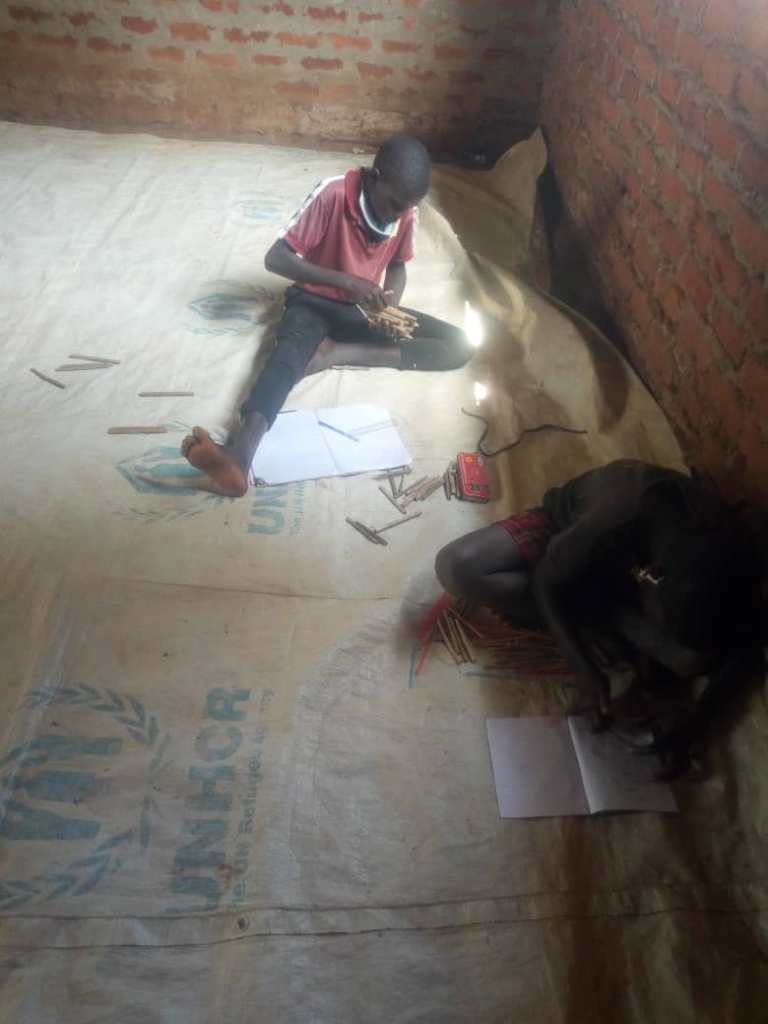
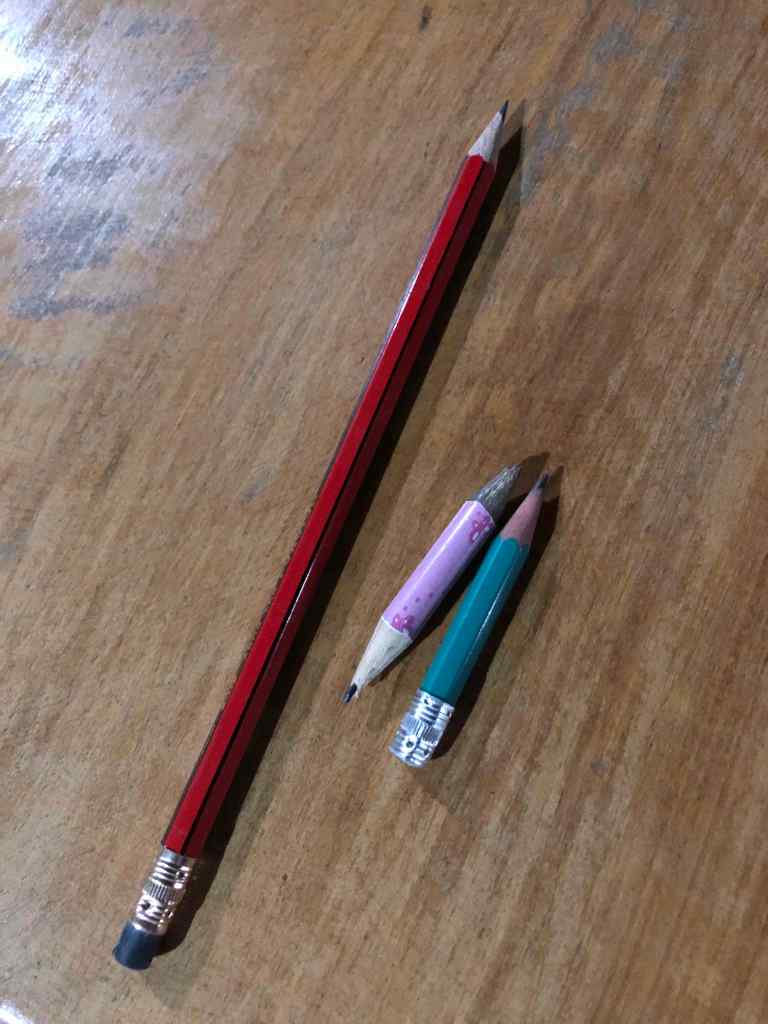
These are pencils from our neighbourhood/homeschool class. Our class shrunk a couple of months back when P4 children returned to school; but it returned back to its original size (and a few extras) when the country went into a 42-day lockdown on Monday.

All children have now returned home from school. And the poor P1-P3 children who were about to go back to school on Monday, were alerted on the eleventh hour that they would not be able to go back to school after being home for almost one and a half years.

Sadly, during the pandemic in Uganda, priority has been given to students in higher education. The older you are, the earlier you can go back to school. Our poor nursery children haven’t even been mentioned since being told to leave school back in March last year.

Supporting our direct neighbours with homeschooling has been a wonderful experience, but it’s also an insightful, encouraging and discouraging one – all mixed up together.

Two children who returned this week were in boarding school; their reading and writing levels have dropped significantly since two months ago. They have also returned quieter, more withdrawn and shocked at the quick responses and answers from their younger peers. But they will pick up…

Sadly today two of our younger class members, who have made tremendous progress, are heading to the village for lockdown. They are not sure how long they will be gone for, but we quickly scrambled to set them some homework to take to the village with them.

It’s strange times for a control freak, but I’m learning to embrace it. At least we know what life will be like (more or less) for the next 42 days…

I’ll take… that inflated paddling pool thanks

In some countries, late night shopping channels offer a wide range of goods for sale – much wider than you could possibly imagine. Of course the stereotype steak knives jumps to mind, along with the perfumes, handbags, and hair accessories (clearly I wasn’t that addicted).

But what’s the Ugandan equivalent? Street vendors who pass by your vehicle through the streets of busy Kampala. Way more convenient. No dialling. No waiting on hold. Just wind down your window and buy what is for sale literally right out the driver or passenger door. And what’s even better? The banter and haggling. The traffic jams make this a perfect opportunity for shoppers. I don’t know why we even bothered going to a supermarket on the eve of President Museveni’s swearing in ceremony; we should have just waited for all the goods to walk past our window during our eight-hour traffic jam.

From fresh fruit and vegetables to windscreen wipers (fitted straight away) and inflatable children’s paddling pools (already pumped up) we could just reach out our hand for these transactions, that’s all the effort it required.

To keep us from going insane during the longest jam of our lives, we recorded every item that went past our vehicle. In no particular order, they were:

  • Bath mats
  • Padlocks
  • Phone chargers
  • Coat hangers
  • Mushrooms
  • Ugandan flags (multiple sizes)
  • Children’s football boots
  • Footballs
  • Grasshoppers (ready to eat)
  • Simsim ball snacks
  • Mangoes
  • Thermos
  • Hand washing stand and stations
  • Belts
  • Windscreen wipers
  • Jackfruit (cut and ready to eat)
  • Pillows
  • Toilet paper
  • Bananas
  • Floor mats for the car
  • Oranges (orange and green colour)
  • Lemons
  • Upholstery spray
  • Pineapples
  • Chipping hoes
  • Sunglasses
  • Peas
  • Paddling pool for kids (already blown up)
  • Car freshener
  • Mosquito nets
  • Children’s floor mats
  • Children’s posters
  • Loafers (natural)
  • Foot scrubbers
  • Cheese graters
  • Set of knives
  • Apples
  • Tool set
  • Hats
  • Face masks
  • Belts
  • Hand brooms
  • Bottles of soda
  • Chewing gum
  • Insect zappers
  • Sieves
  • Dustpan and brooms
  • Woven baskets
  • Collapsible chairs
  • Dog collars and dog leads
  • Skipping ropes
  • Prescription reading glasses
  • Laptop cases/briefcases
  • Small tomatoes
  • Groundnuts (still in their shell as well as ground)
  • Dash mats
  • Roasted soya beans
  • Sponges
  • Phone holders
  • Packets of crisps
  • Sneakers/running shoes
  • Assortment of spieces
  • Garlic
  • Cushions
  • Condoms
  • Handkerchiefs
  • Steering wheel covers
  • Aftershave
  • Shin pads
  • Groundnut paste
  • Grapes
  • Paintings
  • Sugarcane
  • Books about prosperity and how to become rich
  • Small flags from football teams
  • Ginger

I can’t say we were enticed to buy too many items but we did buy: simsim balls, jackfruit and chewing gum. o big spenders here.

Learning community

We have always had neighbours. We have always thought we were ‘neighbourly’. We would lend cups of sugar when asked. We even went to neighbourhood parties and shared meals with neighbours. But we never really knew what it was like to be a neighbour. It wasn’t until 2021 when we have had ‘community’ with our neighbours… and we are just scratching the surface, learning what it means to live in community. 

We can thank the COVID-19 pandemic for drawing us closer to our neighbours. And possibly Jody’s stubbornly high expectations on education quality that she thought it best to teach Myron from home (with the help of an extrovert who struggled learning alone from home). 

This is now common practice for us: 

  • Standing out on the street at meal time and yelling Myron’s name. One child will respond, then trot off and tell Myron it’s time to go home. 
  • Dance-offs in the compound with at least ten children (and occasionally Dan and I). 
  • Gifts of food randomly appearing at the door from our neighbours.
  • The artistic masterpieces in our living area now not only include great works of art from ‘Myron’, ‘Mummy’ and ‘Daddy’, but also ‘Angel’, ‘Odong’, ‘Carolyn’, ‘Aber’, ‘Anena’ and others. 
  • Requesting a neighbour to cook beans for us, and they refuse to accept any payment for this ‘service/gift’ to us. 
  • It takes about 20 minutes to remove all children from the compound when school is done and you need to leave the compound yourself (there’s hide-and-seek; dancing; sweeping; joking around; air-kissing; times tables to say really fast and… just too much fun to be had before leaving).

But it’s not simple, it’s messy, complicated, and we don’t know how to do it well. We ponder how best to raise a ‘privileged child’ who has more toys than the whole village. How to show solidarity when clearly we don’t understand other people’s circumstances and never will. 

But we will keep learning and trying…  

Clearly, Duck, Duck, Goose was a big hit…

We’re helping… no money needed

We’ve been teaching the neighbourhood children for over a month now. There are many highlights that I would love to ‘write home about’, and why shouldn’t I?

Like when the whole class learnt Little Red Riding Hood and did an incredible job retelling it (Ugandan style); or when they have done a fabulous job to start writing the story (I could talk for hours about the benefits of storytelling for story writing… just don’t get me started). There’s also a dance-off that occurred on the grass for about an hour – that was one to remember.

But the moment that sticks out in my mind is a few days ago when we ran out of water (always happens mid-shower…). Who do we call to help us? Of course, the children. We walk across the road and asked a couple of the children to help us fetch water from the bore hole. Two children quickly volunteered and went with two 20-litre jerrycans to the borehole. I told them we would pay them for collecting the water for us (the going rate for water-fetching of course).

The children returned carrying the water (one carrying it on their head, the other by his side). We had a nerf gun war on the grass with them for a while and then Dan went to pay them, they refused the money. They said they were helping us and didn’t want the money. They TURNED DOWN the money. I have never heard of that happening before. Ever! In this country or in any country.

I was amazed, baffled and incredibly proud of those children. It shows how we are a community and reflects the relationships we have developed. Weirdly, it will be sad when schools re-open and they go back to ‘real school’, but we will still make the most of the time we have left.

Teaching 12 is easier than 1…

We have a new outside picnic table in our lounge room – we couldn’t fit enough children around our dining room table. A large sounds chart hangs over our curtains. A portable whiteboard with a hundred chart stuck to the back sits snuggly in the corner; alongside a mobile library which currently houses reading books and learning resources. There’s a jerrycan for drinking water brought in each morning; and 12 cups sit waiting on the bench… school’s back (but in our house).

Schools here have been closed for more than a year. Last year Dan spent a large portion of his time teaching children in our neighbourhood, walking across the road with a radio, slates, chalk, flashcards and a storybook. He just had to walk out of our gate with a storybook in his hand and the children would eagerly assemble.

Alongside teaching the neighbours, we also homeschooled Myron all last year. We started again this year but teaching a highly verbal, extremely social extrovert one-to-one was proving to be quite a challenge. What’s the solution? Bring in more children. Dan and I take it in turns to teach 12 children every morning. We emphasise English and Maths, since they are the areas the children need to focus most on. Even Myron is part of the intervention and he helps to teach remedial reading lessons to one boy before classes begin.

Last week was slightly tough: one of the boys spilled a cup of water over Jody’s computer; and one of the children tried to steal our external DVD player. We suspended lessons for two days unless someone confessed… the next morning there was a confession (no doubt some parent discipline) and lessons resumed.

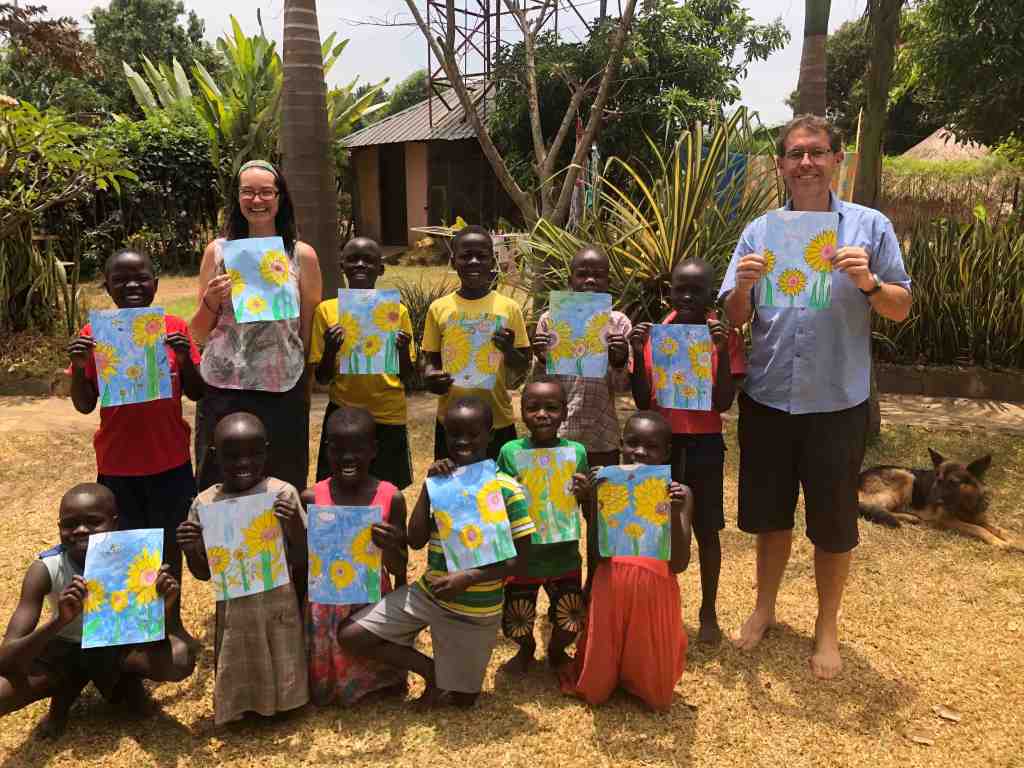
Today was a much lighter start to the week. It’s International Women’s Day here, officially a public holiday. We still had ‘school’ and decided to include a sunflower art lesson – a gift for the women in their lives. We can’t put into words how much the children LOVED painting and completing this activity. And what was so beautiful was that the boy who arrives early each morning to get some extra help with his reading was clearly the star artist in the class. What an opportunity for his peers to see him shine in this area.

And what impact has this had on Myron’s learning? It’s a game changer! He is now much more motivated to learn, it’s no longer a struggle and we are riding on the positive aspects of peer pressure. He may get sent out occasionally… but he’s not the only one.

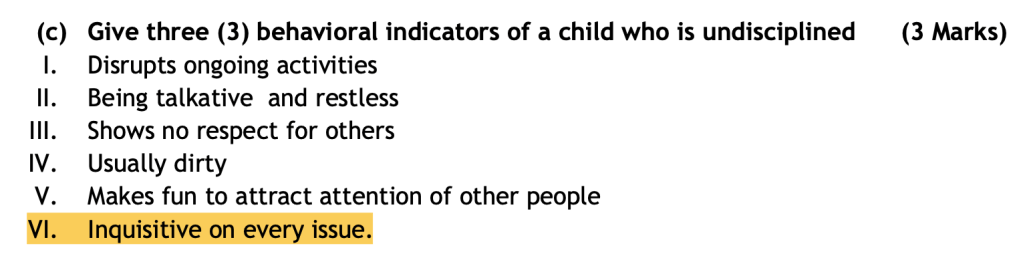
Your inquisitiveness is undisciplined!

I’m not sure about you, but I always thought that children who are inquisitive are bright children: they question the world around them and how it works. Their questions are helping to shape their understanding, and asking questions shows a lot about a child. Children who ask questions are confident, they think critically, they reflect on what is happening, they are constantly learning, re-learning and putting the pieces of life’s jigsaw puzzle together.

But unfortunately, according to Makerere University (the examining body for our nursery teaching training college), children who are “inquisitive on every issue” are “undisciplined”. The photo above is an excerpt from the Mock Examinations marking guide from Makerere University. None of our students gave that option as an answer (thankfully) and hopefully they never will. When going through the examination answers with them I had to say something like: this is what the marking guide says but it’s not true (there were several times our tutors had to do that). Being inquisitive is not only a trait of bright young children, it should be a trait of all young children, it is an expectation of their age and should be encouraged. How can children be active learners when they are not encouraged to ask questions? What do classrooms look like when children are not encouraged to ask questions? (I can sadly show you quite a few of those…)

We are currently preparing a document for Makerere University where we have questioned many areas of their marking guides, as well as how our students’ papers were marked. Obviously this will be one of the areas we will raise. We are not ashamed to say that we are aiming to train teachers who are inquisitive, not undisciplined. Inquisitive practitioners who think critically and reflect about their teaching; even to question how they were marked on their exams!